
Commercial insulation in San Jacinto CA - a building that stays comfortable and quiet
Offices that bake by afternoon or a shop too loud to talk in? We plan roof, walls and air leaks together to fix both.
Talk through your building with us
Call (951) 292-7462 any day of the week, until 10 PM on weekdays and 9 PM on weekends, so you can talk it through after your business closes.
What does commercial insulation cover for a San Jacinto building?
Commercial insulation in San Jacinto means insulating a business building's roof, walls and air gaps to control temperature, noise or both, so one job can make an office, shop or warehouse more comfortable and quieter at the same time.
Most calls I get about business buildings start with a space that won't hold its temperature, a power bill that keeps climbing, or noise carrying between suites or off a shop floor, so my first question back is whether the trouble is heat, noise or both. The price moves mostly with how much roof and wall area we're covering, how the walls are framed and whether old or soaked material has to come out first through insulation removal. The schedule usually follows any roof work you have planned, any permit inspections and whether we're working around a business that stays open, and your own figure comes from the estimate.
Why San Jacinto building owners call Advanced San Jacinto Insulation Company
I do the estimate myself
I usually come out for the estimate myself and show you what's going on up top and in the walls before we touch anything. You can make a good call, whether you hire us or not.
We're licensed and insured
We're licensed and insured, and that matters on a business building where our crew works at height around your staff, tenants and equipment. Feel free to ask about it at the walk-through.
In business since 2013
I started this company in 2013 after years on my dad's insulation crew around San Jacinto. We also work in Hemet, Menifee, Beaumont and county areas, so one crew can cover buildings spread across several cities.
What matters most is getting the order right, with leaks and safety problems fixed before any new insulation goes in. Get in touch and tell me about your building.
How we handle commercial insulation
On a business building, I start with any roof work you have planned and how the walls are framed, because those two shape the whole job. Insulation added under a roof that's about to be torn off may have to be redone, and metal studs need a different plan than wood ones. When you need a quieter space as well as a cooler one, we plan for noise and temperature together so the same materials do both jobs. Any leak, wiring problem or safety issue gets dealt with first, and I'll tell you plainly when it belongs to a roofer or an electrician. Then our crew seals the joints, penetrations and openings where air slips through the shell, since insulation can't do much against a steady draft, and installs insulation across the roof and walls we agreed on, with full coverage out to the edges where thin spots usually show up.
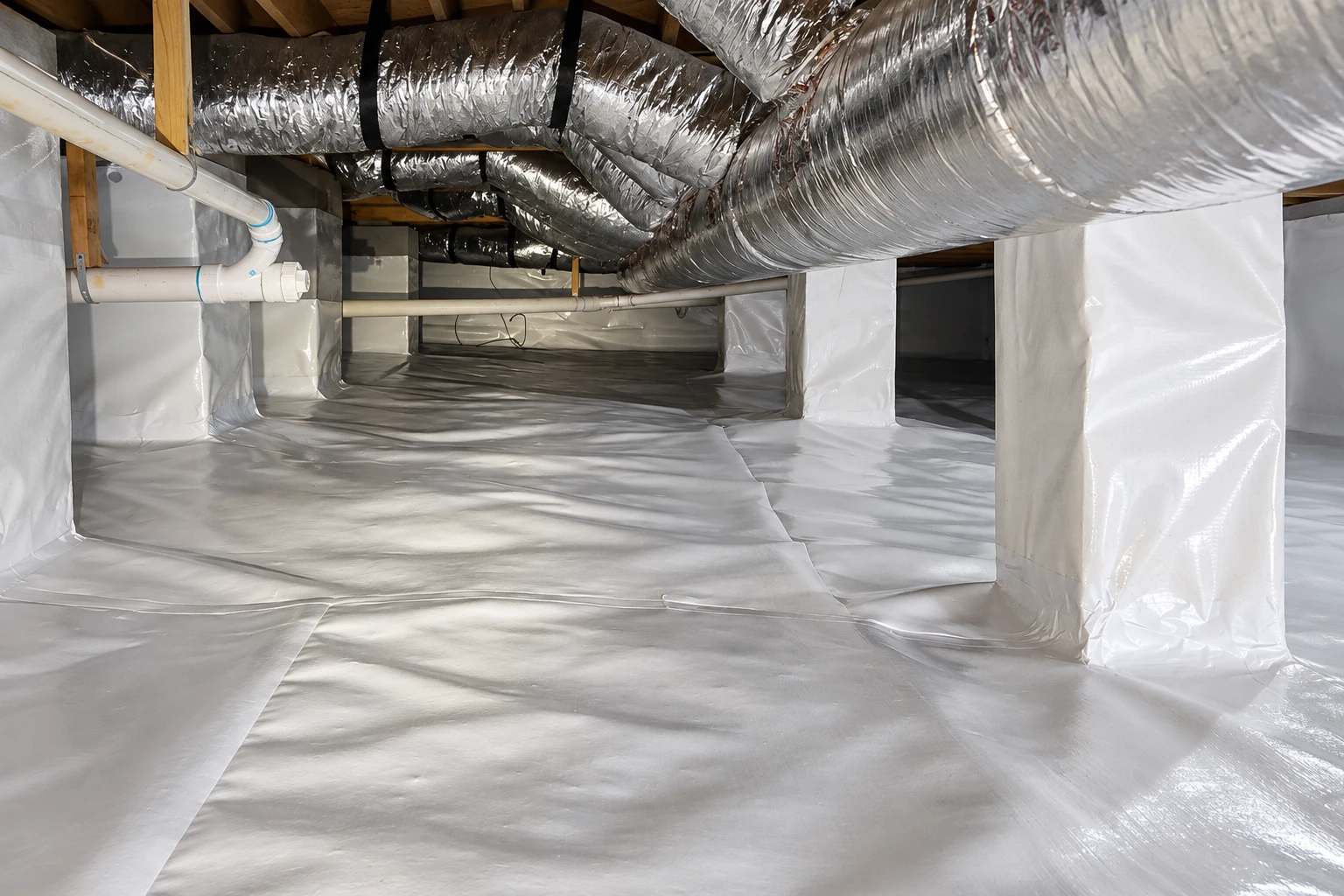
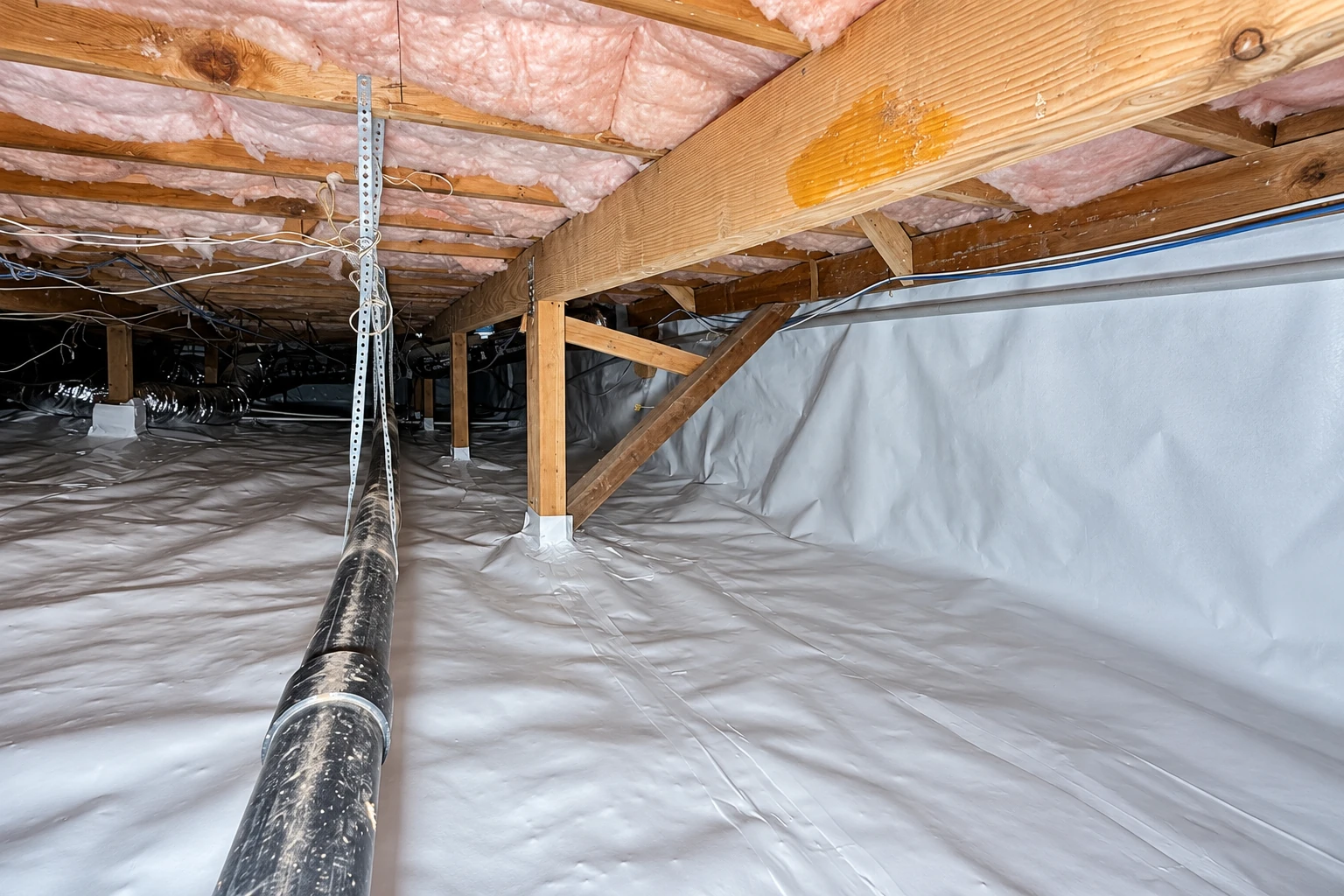
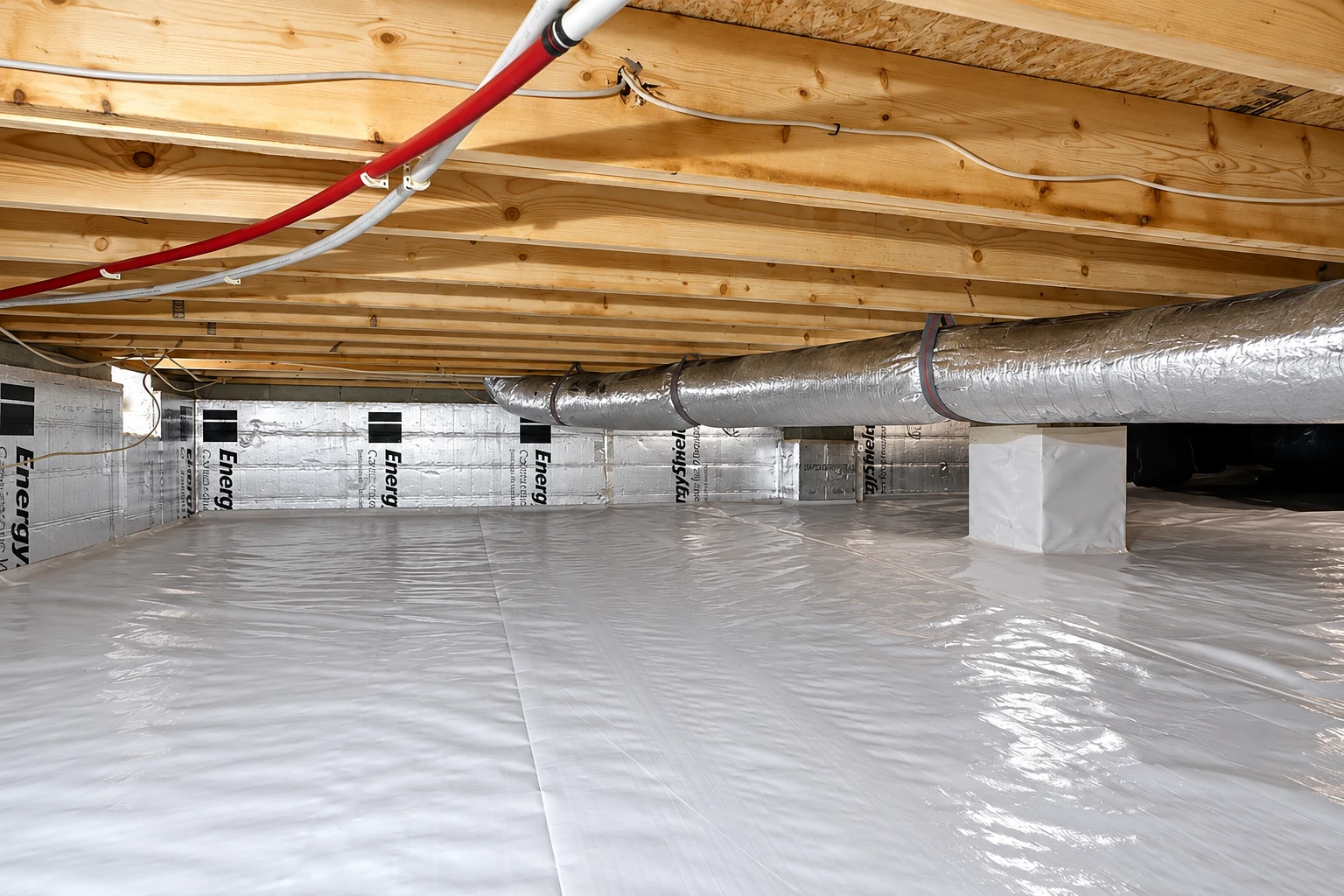
Some buildings need moisture control as much as insulation. If damp air is working into the walls or the roof, we'll talk about vapor barrier installation before the new insulation goes in, and a building on a raised floor may need a crawl space vapor barrier to keep ground moisture out of the floor framing.
Batts, rolls and loose fill
This suits most metal buildings and open framing, and paired with good air sealing it's usually the better value. It's also the easiest to add to later or pull out after a leak.
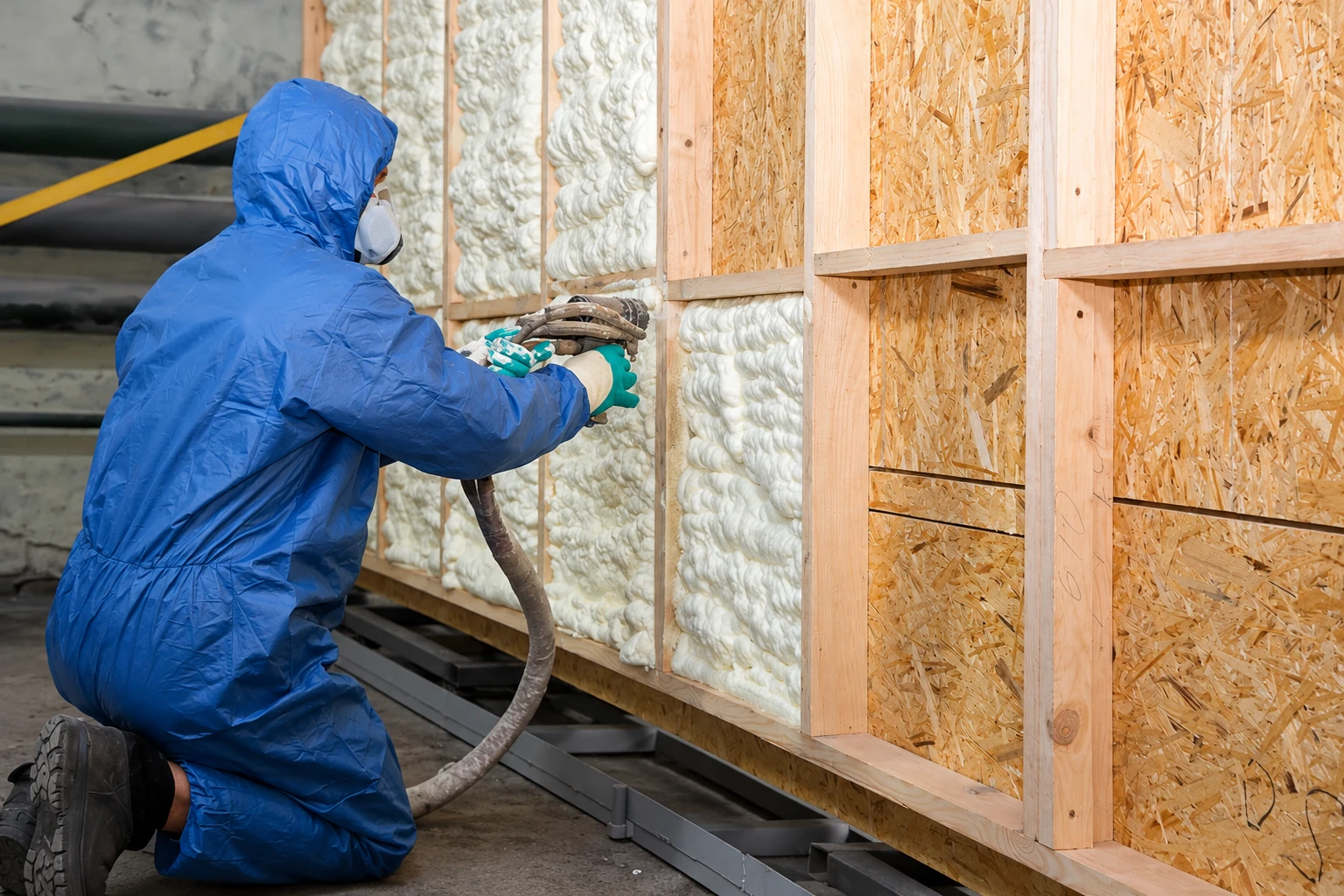
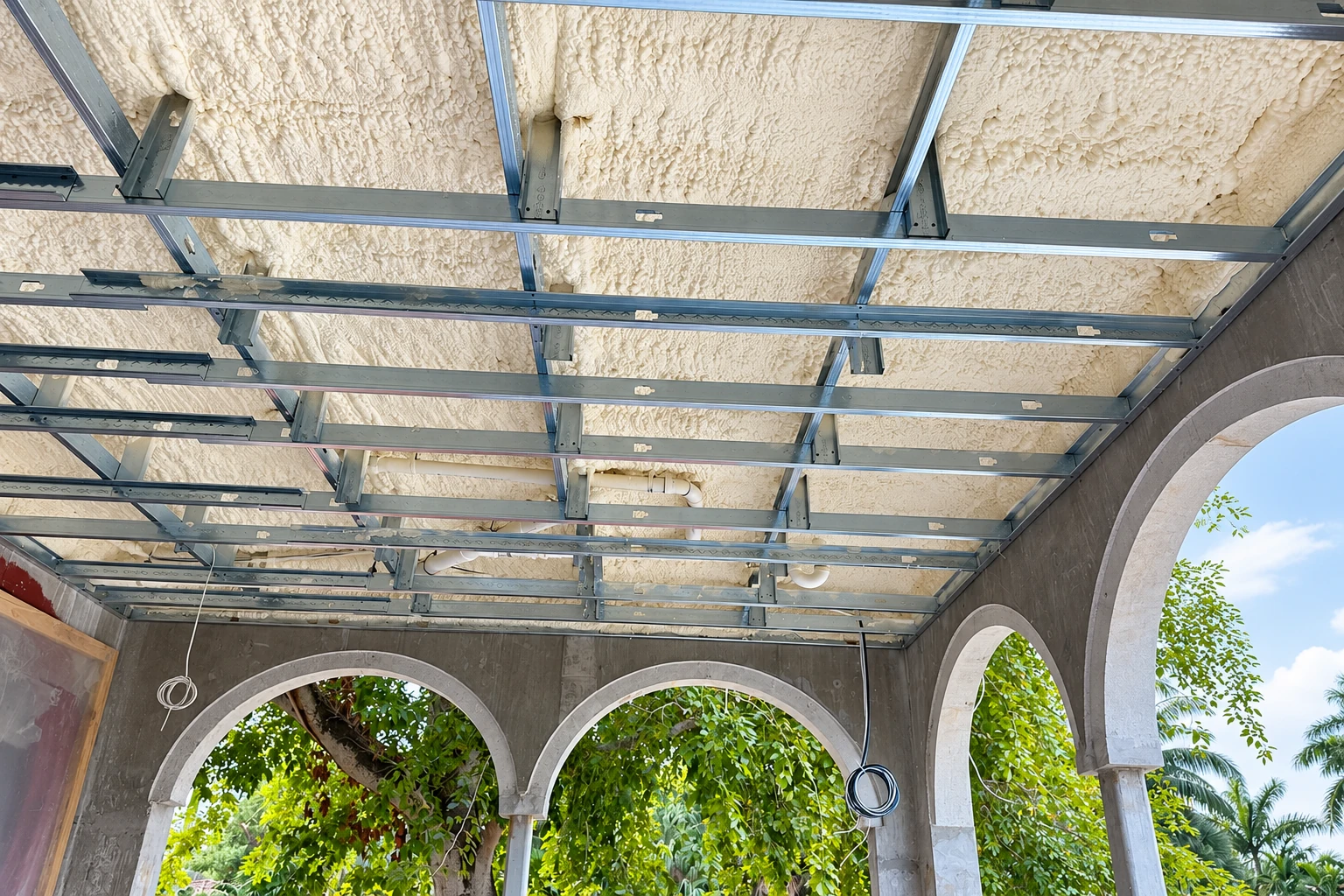
Spray foam on the roof deck and walls
Foam costs more, but it seals air and insulates in one pass, which pays off when ductwork runs through the roof space or the shape is hard to cover. Closed-cell foam, a dense type that blocks moisture, also helps where metal sweats.
How do you know your building's insulation isn't doing its job?
Rooms that bake by afternoon
Offices under the roof or on the sunny side heat up while the cooling runs all day. That usually means thin roof insulation, and each summer you wait shows on the power bill.
Voices coming through walls
If you can hear the next suite's calls or the shop's machines, the walls are usually hollow or full of gaps. Left alone, it turns into steady complaints from staff and tenants.
Stained or sagging ceiling tiles
Brown rings or drooping tiles usually mean a roof leak has already soaked the insulation above them. Wet insulation stops working and can grow mold, so the damage spreads the longer it sits.
Drips under a metal roof
Water dripping on a cool morning when it hasn't rained is usually condensation on bare metal or torn facing. It rusts fasteners and wets whatever is stored below until it's fixed.
What happens after you call about your building?
Call and set up a walk-through
You call or message us, and I walk the building with you, showing you photos of what I find. The estimate lays out each step in the order it should happen.
Our crew does the install
Our install crew does the work with a lead installer running the job and answering your staff's questions on site. Any repairs that need to come first are done before insulation goes in.
Walk the finished job together
Before we leave, I walk you through the finished work so you know what went into the roof and walls and why.
Questions building owners ask us
These are the questions property managers and business owners ask most before a commercial job. If yours isn't here, call and tell me about the building, and I'll ask a few questions back.
How much does commercial insulation cost in San Jacinto?
There's no fair number until someone has seen the building, because the cost follows its size and what the roof and walls need. Spray foam and a continuous layer over metal studs cost more than sealing gaps and adding batts or loose fill, and adding sound control means more material. Call (951) 292-7462 and I'll price your building once I've walked it.
Does a new roof mean new insulation on a commercial building?
It can. Under California's Energy Code, the roof rules for nonresidential buildings apply when the work alters half or more of the roof, or more than 2,000 square feet, whichever is less. Laying a new roof over the old one doesn't trigger them, so tearing off versus overlaying decides how much insulation the job takes, and it's worth telling your roofer and us early so both jobs line up.
What is the best way to insulate metal-framed walls?
Often it takes an unbroken layer of insulation running across the studs, not just insulation between them. Metal-framed walls insulated only between the framing may need that continuous layer added to meet the state Energy Code's wall limits. Ask about it when you're pricing a wall upgrade, since it changes the scope.
Who installs commercial insulation in California?
An insulation and acoustical contractor, which the state licensing board describes as one who installs insulating material for temperature or sound control. The state also allows only certified insulation products to be installed, so it's fair to ask any crew, us included, which certified product they plan to use.
How do permits work for insulation in San Jacinto?
The city's Building and Safety Division reviews permit applications and plan checks and inspects construction in San Jacinto, and it handles all permits online, where you or your contractor can apply, pay, print the permit, schedule inspections and upload documents. If your job needs a permit, we pull it, set up the inspections and walk you through what the city or county asks for, whether your building is inside city limits or in an unincorporated area. Energy rules also vary by place, because California sets minimum requirements by climate zone, and your building follows the zone it sits in.
How do I know if insulation is ruined after a roof leak?
Check for mold first, because one insulation maker's guide says to throw out any water-exposed insulation that shows signs of it. The same guide says wet insulation without mold should be dried quickly and thoroughly, and anything with damaged facing should be replaced. I'd rather see the leak fixed before any new insulation goes up, so call your roofer first and then us.
Get an insulation plan for your building
Tell us your building type, rough roof and wall areas and any roof work planned, and we'll reply within one business day. I'll come out for a free look at the building, with no pressure to book.
Examples of commercial insulation
Other work that pairs with it
Vapor barrier installation
Stops moisture from working into wall and roof assemblies, where it can soak new insulation and rot the framing.
Learn moreCrawl space vapor barrier
For a building on a raised floor, a ground cover underneath keeps damp air from rising into the floor and the rooms above.
Learn more