
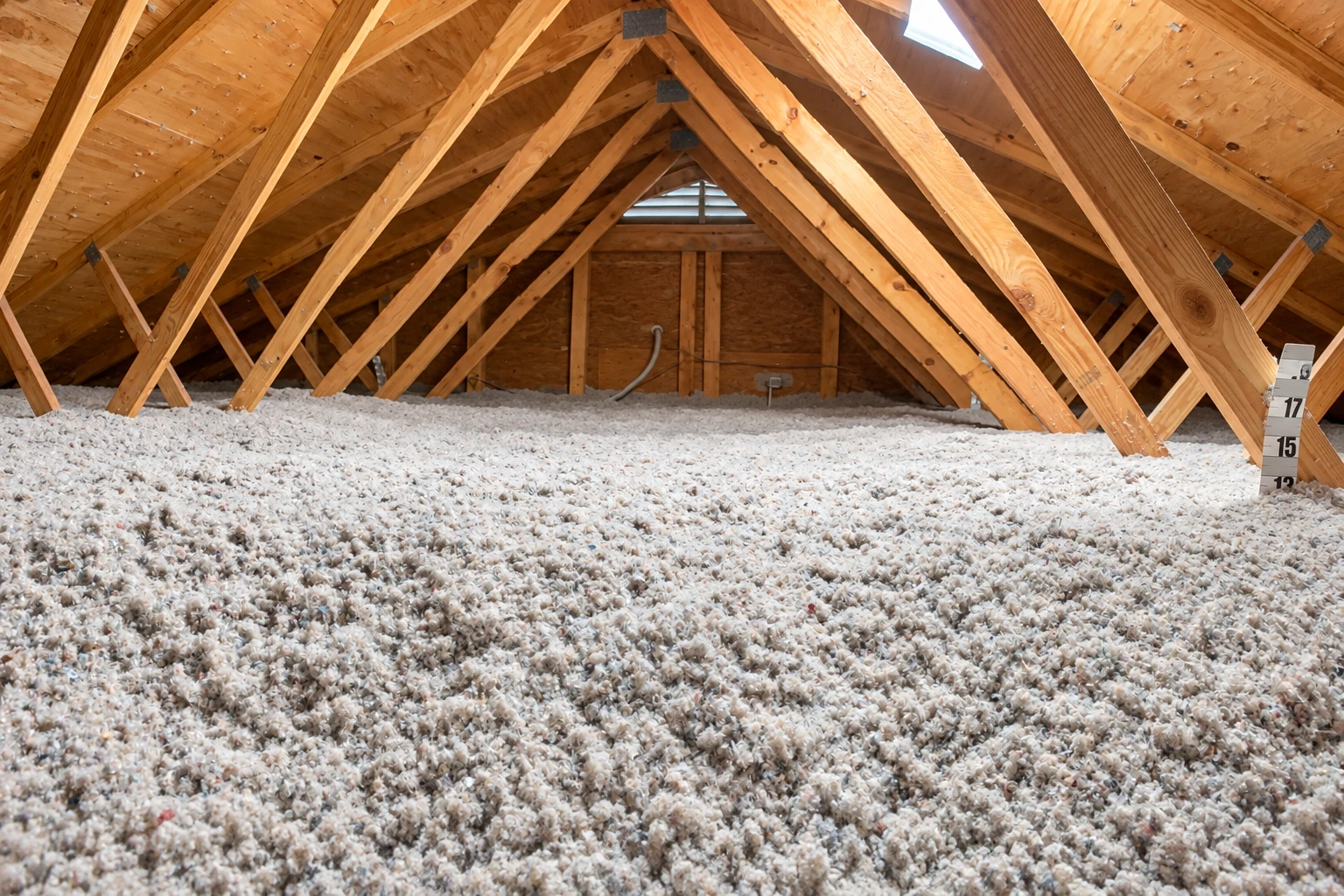
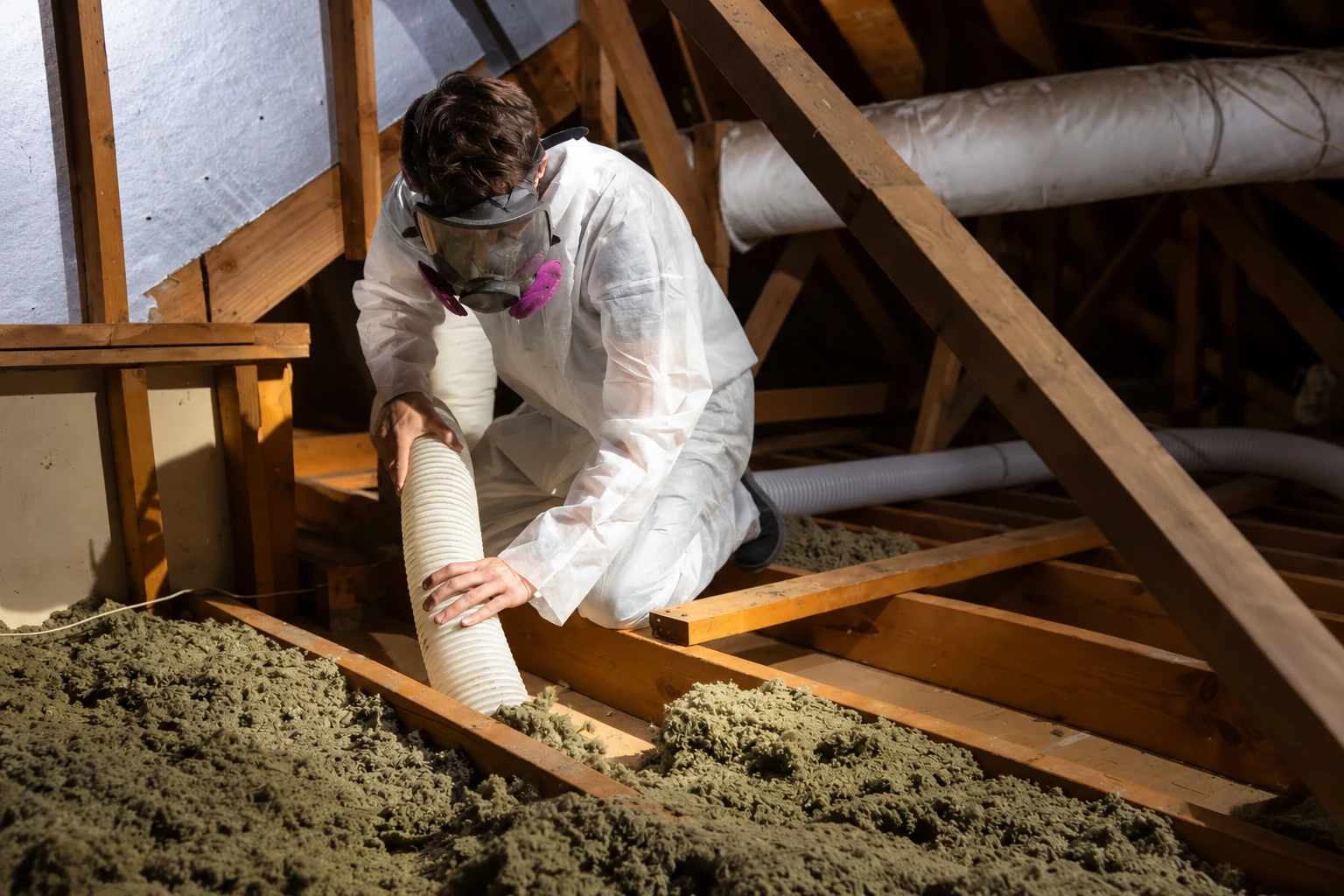
Blown-in insulation in San Jacinto CA - an even attic layer out to the eaves
Hot upstairs or a power bill that keeps climbing? We seal the gaps first, then blow in an even layer across the whole attic.
Find out what's in your attic
Call (951) 292-7462 or use the form, because how many inches you already have, and what shape they're in, decides whether you top up or start fresh.
Is blown-in insulation right for your San Jacinto attic?
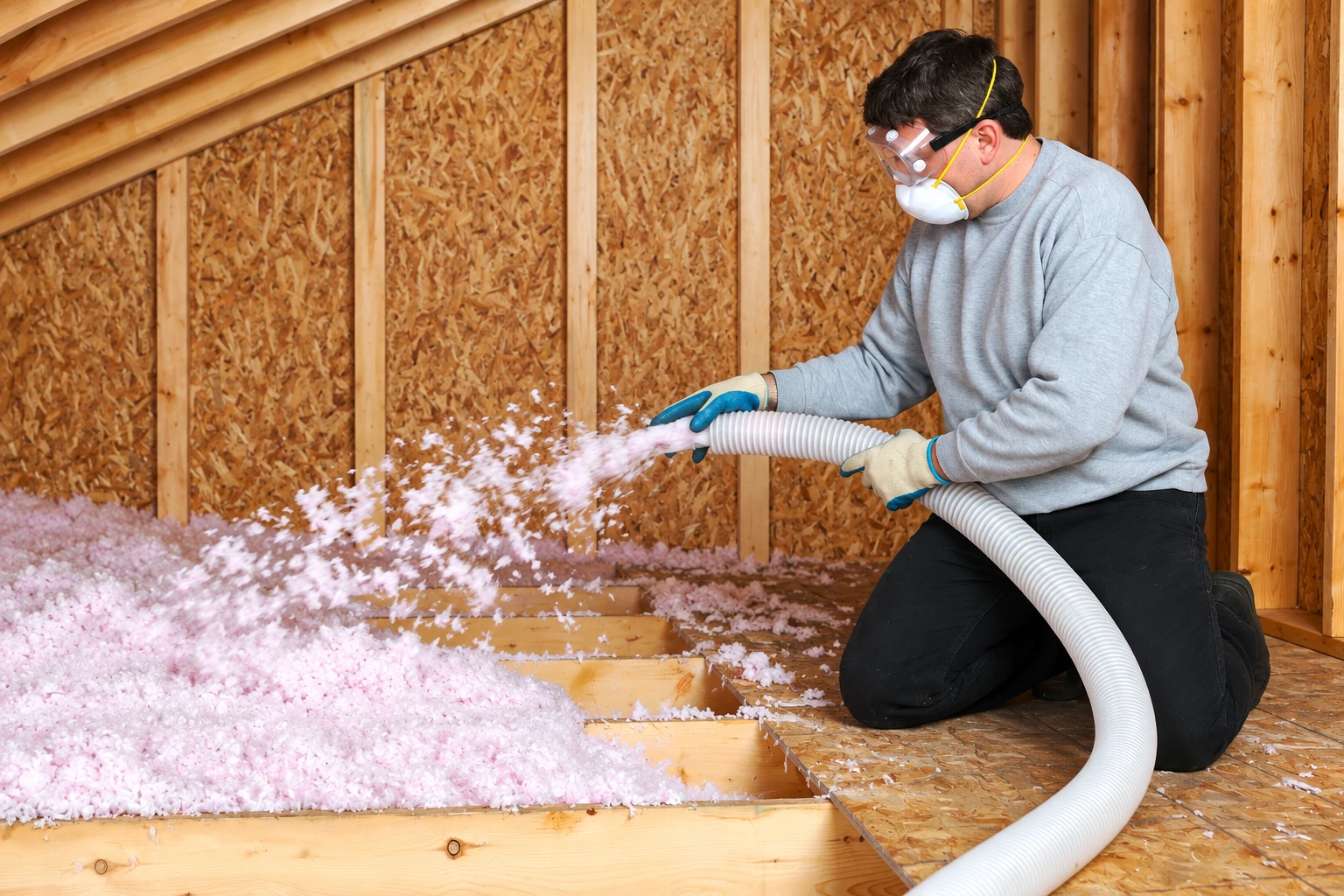
Blown-in insulation is loose fill we blow through a hose into your attic in San Jacinto, where it settles around the framing and into tight spots without tearing anything up, so the rooms below hold their temperature better.
Most people call because a room upstairs won't stay comfortable, or because they want to know if the old stuff up there is still doing its job. The price moves with the size of your attic, how many inches are already there, whether old material has to come out and how many gaps need sealing around lights, pipes and the hatch. The schedule mostly turns on what has to happen before we blow anything in, like a leak or wiring fix, a test on old insulation or a permit. I'd rather see your attic than guess over the phone, so your own number comes with the estimate.
Why San Jacinto homeowners call us for blown-in insulation
I come out for the estimate
I usually do the estimate myself and show you what's going on in your attic before we touch anything. That way you understand your own house, whether you hire us or not.
San Jacinto attics since 2013
I grew up crawling through attics around San Jacinto with my dad and started this business in 2013 after years on his crew. Buried vents and thin edges are the first things we check.
Licensed and insured for attic work
We're licensed and insured. That matters up there, where the crew works around wiring, ductwork and the back of your ceiling, and you shouldn't carry the risk of a slip.
If you know of damp insulation, old flaky gray insulation or a gas furnace up there, mention it when you contact us, so I come ready to check it.
How we do blown-in insulation
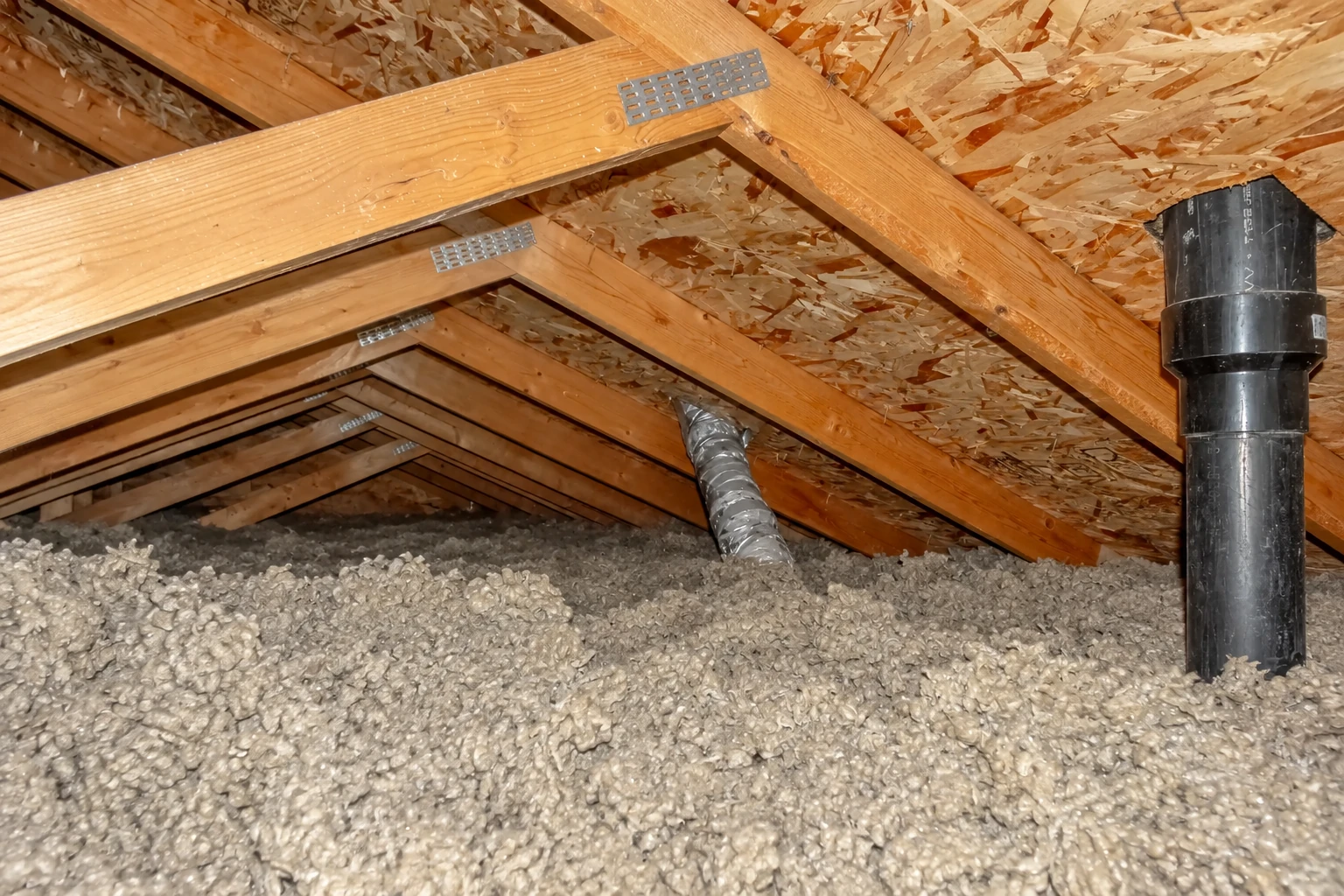
Before anything gets blown in, I check what's already up there, how many inches, whether it's dry and what shape the wiring, vents and framing are in. If old insulation is damp, the framing looks rotted or there's old knob and tube wiring, we point that out first, because new insulation over a leak or a wiring problem just hides it, and some of those fixes belong to a roofer or an electrician. Then our crew seals the gaps around can lights, pipes and the attic hatch, sets baffles at the eaves so the vents stay open and the fill can't spill into them, and builds small dams that keep insulation off any equipment up there. Last, we blow the insulation in as evenly as we can, all the way out to where the ceiling meets the walls, because the edges are where coverage usually comes up short.
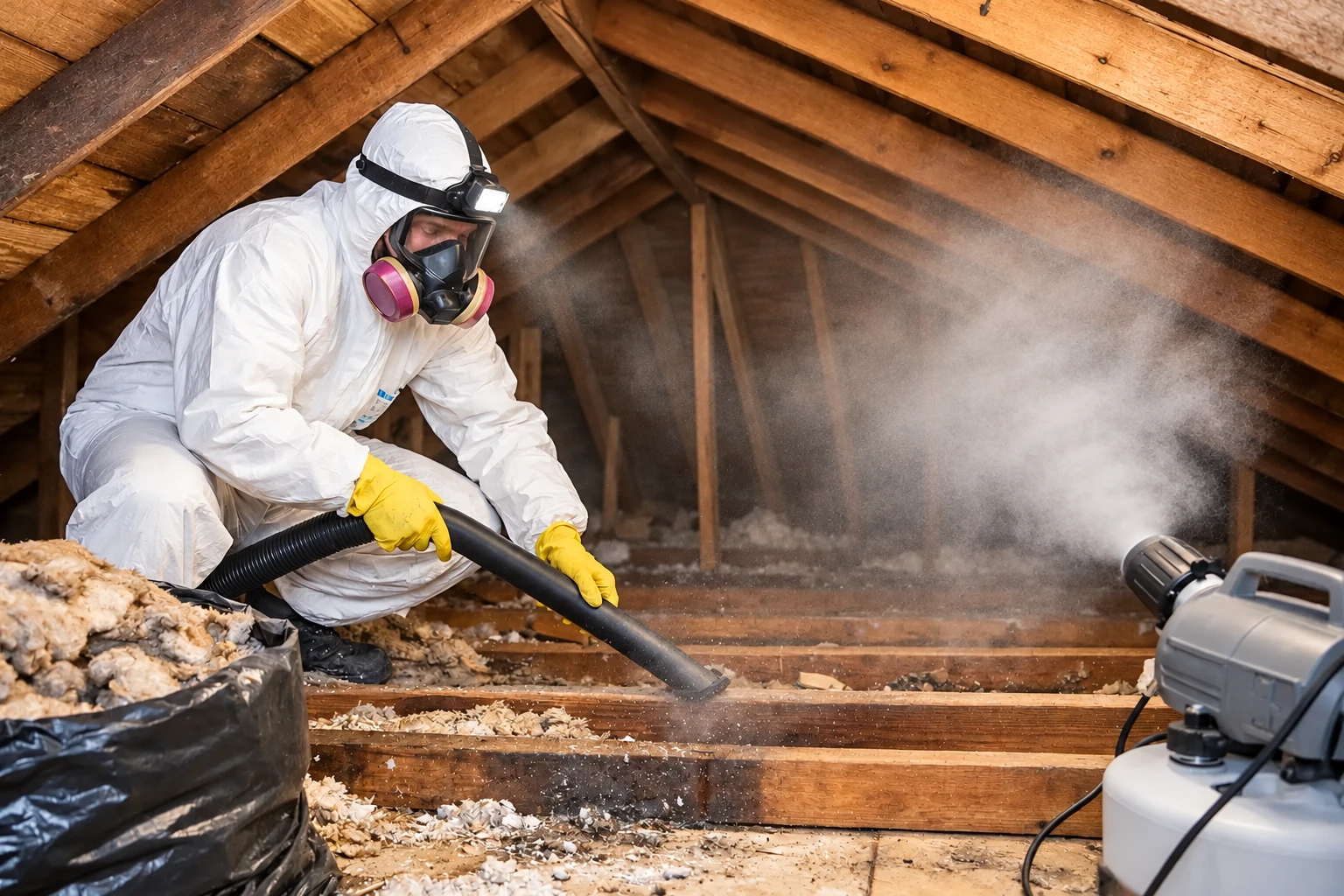
When the old layer can't stay, insulation removal is its own job we finish before the new fill goes in. If the attic is only part of the problem, say drafty rooms or cold floors over a crawl space, home insulation takes in the walls and floors too.
Topping up what's there
This suits an attic where the old insulation is dry, clean and just too thin. We seal the gaps, then blow a fresh, even layer over it, which keeps the job simpler.
Clearing out, then starting fresh
This suits an attic where the old layer is soaked, moldy or full of droppings. It comes out first, because covering it keeps the smell, the pests and the moisture right where they are.
How can you tell your attic needs more insulation?
Upstairs stays hot
The upstairs rooms stay warm long into the evening while downstairs feels fine. That usually means thin insulation or open gaps overhead, and the AC keeps running to make up for it.
Joists showing through
Pop the hatch and the tops of the ceiling joists are showing. The layer has settled or was never thick enough, and every month it stays that way shows up on the power bill.
The room over the garage
The room over the garage is hot in summer and cold in winter. Ceilings over garages often get the thinnest coverage, and the longer it waits, the less that room gets used.
Dark or damp spots
Stained, matted or damp insulation near the eaves or around pipes points to a leak or trapped moisture. That has to be fixed first, and waiting lets it reach the framing.
What happens after you call about blown-in insulation?
Walk the attic with me
After you call or message, I go through the attic with you and show you photos of what I find. My estimate lays out each step in the order it should happen.
Our crew does the work
Our install crew does the job with a lead installer running it, in the order the estimate lays out. We cover the path to the hatch so attic dust stays out of your rooms.
Walk through the finished job
Before we leave, I walk you through the finished attic so you see what was done and what to keep an eye on. Your satisfaction, guaranteed.
Blown-in insulation questions
These are the questions San Jacinto homeowners ask us most about blown-in attic insulation. If your attic doesn't fit any of them, call and ask about your own house.
Do I need air sealing before blown-in insulation?
Yes, in most attics the gaps get sealed first. Insulation slows heat but doesn't necessarily stop air moving through it, so air sealing, closing the gaps in the ceiling below, goes in before the fill. It's easiest to plan and budget it as step one of the same project, since nobody wants to dig back through a fresh layer later.
How much does blown-in attic insulation cost around Riverside?
Attic insulation in the Riverside area usually costs about $1,500 to $5,000 per job. That's the going range around here, not our price, and where your attic lands depends on its size, what's already up there and how much sealing or cleanup comes first. The estimate gives you your own number.
How do I handle old vermiculite insulation in my attic?
Leave it alone until it's tested. Vermiculite is a light, pea-size, flaky gray mineral insulation that may contain asbestos, and ENERGY STAR's advice is to leave it undisturbed until an approved lab tests it and finds none. If you think you have it, tell me before I come out, and we won't blow anything in until the testing is done.
How long does a blown-in insulation job take?
Most of the time goes into getting the attic ready, not into blowing the insulation. Repairs, a lab test on old insulation or a permit can add time before our crew starts, while a clean, dry attic that only needs a top-up moves along quicker. Once I've seen your attic, I can tell you what's in line first.
Should I worry about my gas furnace or water heater when sealing the attic?
It's worth checking before and after the work. The usual advice is to have a Home Performance Contractor test how gas or oil appliances draft, because sealing a house tighter can sometimes pull their exhaust back inside. That test belongs to another trade, so tell me what's in your house and I'll point you the right way.
Who handles the permit for attic insulation in San Jacinto?
If your job needs a permit, we pull it, set up the inspections and walk you through what the city or county asks for. Inside city limits, the City of San Jacinto's building and safety division handles permit applications and inspects construction, and applications go through its San Jacinto Connect online portal. We work in city limits and unincorporated county areas alike, and either way the blown layer should meet or beat what the state's current energy code calls for.
Get your attic looked at for free
Tell us about the room that won't stay comfortable and anything you know about damp insulation, vermiculite or gas appliances up there. We reply within one business day, and I come out for a free look with no obligation.
Blown-in insulation at work
Other work that often goes with it
Home insulation
If drafts and cold floors stick around after the attic is done, this looks at the walls, floors and crawl space too.
Learn moreInsulation removal
When the old layer is wet, moldy or full of droppings, clearing it out gives the new insulation a clean start.
Learn more